
There are a number of responses to your question, the best one depends upon your intended usage.
Yes, modern TVs have a HDMI port which will hook up to your brick, I have just been using my caravan TV to a get a Raspberry Pi up and running. However the resolution on mine is not good at 1366x768, a decent monitor will be at least 1920x1080 and that difference really shows. My TV was adequate for the short term, limited monitor use I needed but, no way, would I tolerate it as a long term monitor.
Your brick looks good but a little expensive have a look at "industrial PCs" too.
Consider also a Logitech wireless keyboard and mouse.
Given the desk space and power usage you will have with the above equipment I'd suggest a notebook computer instead; I recently bought a Dell 14", I5, 16GB, 256GB from an ebay reseller of corporates for $400 delivered. That was six months ago and it's fine - it came with W11 but I installed Linux as a dual boot and, almost, never use windows.
Also note: caravan TVs are not great on 12V nominal, if the supply drops to 11.9V you'll have issues.
Thanks for the advice. It does appear that a laptop makes more sense. I would just need a HDMI cable for an external monitor, and a wireless mouse and keyboard to achieve the same end. I can't find a similarly featured laptop for a comparable price, though.
__________________
"No friend ever served me, and no enemy ever wronged me, whom I have not repaid in full."
Thanks for the advice. It does appear that a laptop makes more sense. I would just need a HDMI cable for an external monitor, and a wireless mouse and keyboard to achieve the same end. I can't find a similarly featured laptop for a comparable price, though.
IMHO,
The mini computer is a better way to go when travelling... compact, fully peripheral featured (no need for external Hub) and 12v input to complement the 12v TV. No 240v inverters required.
Add mouse, keyboard and HDMI cable and you are all set to go. A i3 pc is under $300.00 on Aliexpress and Temu. No need for a costly Laptop or Notebook with less features.
The other advantage is, use one at home and, also, take it with you when travelling.
__________________
Cheers, Richard (Dick0)
"Home is where the Den is parked, Designer Orchid Special 21' towed by Jeep Diesel Grand Cherokee Limited"
"4x250W solar panels, 360w solar blanket, Epever 80A charger and 4x135Ah Voltax Prismatic LiFePO4 Batteries".
I bought my Dell from these people and am happy with the transaction.
The Dell uses 200Wh/day which is probably about the same as your brick.
However if all you want from the computer is to surf the net and use a word processor, spreadsheet etc then consider buying a used Raspberry Pi for about $100.
I have a very similar unit bought from Alldocube on Ali and it now accounts for about 95% of my computing needs. It's also my mobile phone, At 2560x1600 the display is excellent and the sound is great too, also the screen is large enough to watch videos. I can connect a 2TB hard drive if necessary although the 128GB + 256GB SSD drives integral to it support most of my needs.
Of course you could go for any tablet and a Bluetooth keyboard, I did that for a while and it worked well.
-- Edited by dorian on Thursday 23rd of July 2026 01:09:30 PM
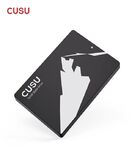
$318.32 for two of these 2.5" Sata3 1TB drives delivered through Aliexpress.
Nothing fake about these drives. Specs and speeds correct.
Purchased SSD drives and ram and USB memory (32gb/64gb/128gb) in the past with no issues.
Just because they are "no brands" does not make them inferior. Probably come from the same factory labelling "brand" items.
If and when my notebook calls it a day I will certainly move across to a mini PC for the benefits I listed in an earlier post.
Never had an issue with purchases from Temu, Aliexpress and Amazon and they all have returns policies.
Too many start with negative opinions before researching thoroughly prior to purchasing.
I can say the same about Western Digital brand equipment... had an SSD 256gb SATA drive and 2TB Disc Drive fault within four years whereas "no brands" are still performing faultlessly.
Sorry, not having a go, just voicing my opinions and personal experiences.
>Just because they are "no brands" does not make them inferior.
It probably does.
But there is no way to tell from an end user's perspective what the integrity of those semiconductors is or what the design of the drive provides. Does it have wear levelling for example?
I accept that they work for you and they seem OK but what is their life span and over what temperature range and what will be the percentage of errors, many of which you will not know about, in a year or two.
Making high density semiconductors is very hard - people do not sell their products for x if they can get 2x.
I prefer a different approach. Rather than buy something new that is made for a low price, I like ex corporate ones that are designed to last. I have a Lenovo M710q (tiny PC) that is running 99.9% of the time. Virtually silent, and easily replaced parts, although in 3 years it still runs perfectly. My main PC is a SFF Dell (small form factor) and it runs almost as much. Both bought ex corporate from resellers like BBN2 listed.
I had an Acer notebook with a soldered SSD that failed after 4 years.
I have a Samsung SSD (Samsung NAND flash memory) in my desktop. This has failed numerous times and been resurrected each time using a self-repair method. I'm still using it, but it cannot be trusted.
I have a Crucial SSD (Micron NAND) which I bought as a backup for the Samsung. I went to use it after the most recent Samsung failure, but I found that the file system was corrupted. Internet reports now say that this model is prone to failure.
I have a lesser known brand of SSD in a HP laptop which has so far been without problems.
I would still prefer to buy a known brand, although I will be avoiding Samsung. Crucial has left the consumer market, so they're not an option anymore. My next punt will be with Kioxia (Toshiba NAND).
Most prominent OEM brands, as well as the cheapies, will rebadge the NAND flash chips so you won't know what you're getting by visual inspection alone. In many cases the chips will be second or third or fourth tier parts from Micron and others. Micron actually has a subsidiary company, Spectek, which is set up to market Micron's seconds. The chips bear the Spectek logo and a part number which reflects their grade. I expect that many cheapie operators purchase the dies and mark the packages with in-house IDs to obsure their origin.
It's even worse for USB sticks. I seem to recall that SanDisk estimated that up to one third of SanDisk-marked storage products are fakes. USB sticks often have the junkiest flash that shady operators can find. They will often buy faulty chips and disable the bad areas. For example, you might have a 32GB stick containing a 64GB chip where one half has been switched off.
As for hard drives, there are only three brands left -- Seagate, Toshiba and Western Digital. Hitachi (HGST) is owned by Western Digital and is maintained as a separate entity with its own, separate design architecture. Currently the most reliable 3.5" HDDs are made by HGST, while Seagate is the worst. Toshiba makes the best 2.5" HDDs.
-- Edited by dorian on Friday 24th of July 2026 02:53:23 AM
__________________
"No friend ever served me, and no enemy ever wronged me, whom I have not repaid in full."
The CUSU SSD in that review has a Chinese controller (Yeestor) and Hynix NAND flash (Korean). I've been watching one Chinese Youtuber who dislikes Hynix chips because their contents degrade when a hot air station is used to desolder them. Other operators in the data recovery business have the same reservations.
I'd like to take a punt with cheapies, but I don't want to be stuck in the middle of nowhere with broken equipment.
In short, I no longer trust any storage products. HDDs and SSDs have both been pushed to the limits of technology. I'm waiting and hoping for a technology revolution that will restore the levels of reliability that we had 20 years ago.
__________________
"No friend ever served me, and no enemy ever wronged me, whom I have not repaid in full."
The CUSU SSD in that review has a Chinese controller (Yeestor) and Hynix NAND flash (Korean). I've been watching one Chinese Youtuber who dislikes Hynix chips because their contents degrade when a hot air station is used to desolder them. Other operators in the data recovery business have the same reservations.
I'd like to take a punt with cheapies, but I don't want to be stuck in the middle of nowhere with broken equipment.
In short, I no longer trust any storage products. HDDs and SSDs have both been pushed to the limits of technology. I'm waiting and hoping for a technology revolution that will restore the levels of reliability that we had 20 years ago.
According to that review the recommendations provided the SSD drives are suitable for home and office use. Not for Servers of high data throughputs.
No problematic longevity criticisms either. Suitable for my computing needs.
Post your final purchase decisions here of brands and costs when done.
__________________
Cheers, Richard (Dick0)
"Home is where the Den is parked, Designer Orchid Special 21' towed by Jeep Diesel Grand Cherokee Limited"
"4x250W solar panels, 360w solar blanket, Epever 80A charger and 4x135Ah Voltax Prismatic LiFePO4 Batteries".
It's a respected brand with good reviews, but it costs twice as much as an Aliexpress cheapie. I looked at the recommended Australian computer store, but their mini PCs are even more expensive.
I've reached the point in life where I just want something that works and keeps working. Performance doesn't matter greatly, and I'm willing to pay a price premium for reliability. On the other hand, I've had a disappointing run with brand names, so I'm wondering whether I should go for an Aliexpress deal.
Too many choices.
__________________
"No friend ever served me, and no enemy ever wronged me, whom I have not repaid in full."
Why the focus on being so small? That one really is tiny. Pretty much all custom components so not easy to source replacements. The Lenovo tiny PC I suggested earlier is a fraction the price (used) so just buy another if parts are needed. How would you go with a warranty claim?
The technology for the proposed Beelink is quite old .... from about 2021. The specified Ryzen processor is from about 2021, and built to use DDR4 ram. Current technology uses DDR5. For a new PC this is surprisingly dated. They do have other models with more current technology but at higher prices.
For my usage nowadays - as a retired person, travelling - if the gods of computers forced me to chose...
I would go for this Alldocube iPlay 60 Pad Pro tablet (I'm typing on it now) with (semi) integral keyboard and an external 2TB mechanical hard drive.
I'd also have a Raspberry Pi for sundry applications which can be accessed fully from the tablet.
The other week I had to spend 12 hours in hospital - with the tablet, its keyboard, the 4G Telstra network access and the hard drive I had my entire computing system at my fingertips - the doctors and nurses were impressed :)