I'm currently camped at around latitude 34d south and decided, it being 2nd May, to change the angle of my solar panels to their winter setting; or from about 45d to 60d. Doing so has increased panel output by about 11% as determined from an 11am test. When I made the legs for these 4 x 200W panels I calculated a set of angles for Australia and drilled multiple holes in the legs to suit so changing the angle is a simple task and a worthwhile one too it seems.
Jaahn said
02:14 PM May 2, 2022
Hmm Mike good to know you still work to the callender even in the bush That is a good boost.
Yes it is simple to do an uncomplicated stand that just works (without a motor. Gees where do you switch it on sir)
Jaahn
Peter_n_Margaret said
03:57 PM May 2, 2022
In Norway, especially north of the Arctic Circle, they stand solar panels verticle.
The added bonus is that the snow does not build up.
Cheers,
Peter
KevinJ said
04:24 PM May 3, 2022
Mike Harding wrote:
I'm currently camped at around latitude 34d south and decided, it being 2nd May, to change the angle of my solar panels to their winter setting; or from about 45d to 60d. Doing so has increased panel output by about 11% as determined from an 11am test. When I made the legs for these 4 x 200W panels I calculated a set of angles for Australia and drilled multiple holes in the legs to suit so changing the angle is a simple task and a worthwhile one too it seems.
Ensure you understand which of the two angles are being referred to.
Two angles???
Generally the panel will form the hypotenuse of a right angled triangle thus if I say place the panel at 60d I could be referring to either of the two angels which is not the right angle, you just need to understand which of those two angles the number refers to.
Ensure you understand which of the two angles are being referred to.
Two angles???
Generally the panel will form the hypotenuse of a right angled triangle thus if I say place the panel at 60d I could be referring to either of the two angels which is not the right angle, you just need to understand which of those two angles the number refers to.
Ok, I know exactly what you mean. Thanks Mike.
P.S. If you ever hear VK2KWJ on your Ham radio, let me know.
jegog said
08:22 PM May 5, 2022
Peter_n_Margaret wrote:
In Norway, especially north of the Arctic Circle, they stand solar panels verticle. The added bonus is that the snow does not build up. Cheers, Peter
Do they have motors to track the sun in summer?
The satellite dishes all seem to be mounted horizontal.
The satellite dishes all seem to be mounted horizontal
Did not see any trackers, but maybe some.
Sat dish needs to point to the signal source.
Cheers,
Peter
Aussie1 said
03:51 PM May 6, 2022
Our solar panels are flat on the caravan roof. As far as I am concerned it is the suns job to find them. When the sun does not do it's job then my reliable Honda generator takes over. And it has no concerns for the angle ;) Even if it is snowing :):):)
Mike Harding said
02:09 PM May 7, 2022
Aussie1 wrote:
Our solar panels are flat on the caravan roof
Depending on the time of year and your location in Australia I'll wager you're losing around 30% of the capability of your panels, perhaps more.
OK if you're just a tourist/holiday maker perhaps but not if your caravan is where you live.
Peter_n_Margaret said
06:10 PM May 7, 2022
Mike Harding wrote:
Aussie1 wrote:
Our solar panels are flat on the caravan roof
Depending on the time of year and your location in Australia I'll wager you're losing around 30% of the capability of your panels, perhaps more.
OK if you're just a tourist/holiday maker perhaps but not if your caravan is where you live.
So you can get all complicated with moving portables around all the time or making them tiltable or simply add another panel or 2 and forget them.
Cheers,
Peter
Mike Harding said
06:54 PM May 7, 2022
It's like trying to have a conversation with a fourteen year old.
vk6gmd said
06:46 PM May 8, 2022
Mike Harding wrote:
It's like trying to have a conversation with a fourteen year old.
I guess a 14 year old is pretty tech savvy nowadays, at least the ones I know. I agree with you about the losses of flat panels, and on top they heat up without airflow underneath and loose even more capacity, apart from the fact that they transfer a lot of heat onto the roof and into the van.
I can lift mine to up to 60 degrees and that's measured from the roof plane. Just by having cooler panels at 5 degrees is already a win.
As a result of Mike's original post, it made me think about my setup too. I made a Solar Panel Sun Spotter out of scraps of things at home and then took some measurements of the sun's altitude each hour throughout the day. I have documented the results in the attached PDF and included some pictures. I can now point my Solar Panel at the sun, anywhere and anytime knowing it is catching the maximum amount of sun at all times (give or take). Thanks for the tip Mike.
However I think we're either going to have to find an alternative to the Frosties Fruit box or start eating them for every meal before we go into production :)
KevinJ said
11:24 AM May 17, 2022
Mike Harding wrote:
Nice idea Kevin.
However I think we're either going to have to find an alternative to the Frosties Fruit box or start eating them for every meal before we go into production :)
Maybe you prefer Magnums.
jegog said
01:16 PM May 17, 2022
The KISS principle solution is to instal sufficient panels to recharge you batteries during a normal day. Then there's no need to consult tables, adjust the panel angle and orientation of the van, nor any requirement to remember to secure it before traveling on.
KevinJ said
03:16 PM May 17, 2022
jegog wrote:
The KISS principle solution is to instal sufficient panels to recharge you batteries during a normal day. Then there's no need to consult tables, adjust the panel angle and orientation of the van, nor any requirement to remember to secure it before traveling on.
Very true though I looked at the problem from the point of view that I had bits and pieces lying around my workshop which cost me nothing and it took only a couple of hours to put together whereas the cost of an additional solar panel was in the hundreds. On top of that, the panel weighs 12 kgs and the gadget weighs 200 grams. I tend to squeeze the last drops out of the toothbrush tube so thought I would squeeze the last drops of sunlight from the solar panel. The piece de resistance is that I get to enjoy the creation of something useful from pieces of junk. To me, it's very rewarding. Simple things amuse simple minds.
Roy E said
09:13 AM May 18, 2022
I guess everyone is only considering solar panels best angle when camped. For me, not stopping very long at each camping spot, much or perhaps most of my solar power is generated whilst on the road and for that, I'm happy to have my 630w of solar panels flat on the roof. By the way, Peter, the satellite dish pictured is pointing at the satellite. look carefully where LNB is in relation to dish centre.
Cheers,
Roy.
oldbloke said
10:10 PM Jun 5, 2022
No doubt getting the angle right has merit. But I just point my portable at the sun, best guess right angles.
IMO a combination of roof and portables is the best compromise. Roof panels must be pretty inefficient compared to a portable that gets moved 3 or 4 times a day.
Ill go lithium in a couple of years I think if the van is getting plenty of use.
oldbloke said
09:29 AM Jun 11, 2022
Mike
Out of curiosity.
What do you get flat on ground compared to 60deg? (Worst v best)
Whenarewethere said
10:03 AM Jun 11, 2022
oldbloke wrote:
Mike
Out of curiosity.
What do you get flat on ground compared to 60deg? (Worst v best)
It is simply back of the envelope calculations.
oldbloke said
01:56 PM Jun 11, 2022
Mmm, not sure. Does that mean if the panel is 25dec from perpendicular you only get abt 40% of max?
Jaahn said
06:29 PM Jun 11, 2022
oldbloke wrote:
Mmm, not sure. Does that mean if the panel is 25dec from perpendicular you only get abt 40% of max?
Yes that is the general drift of it.
I also observed in previous years when I had loose portable panels that in strong sunlight the panels get very hot flat on the ground and the output is noticeably reduced by this effect. So when I played with them I got noticeably more current by angling the panels 'a bit' and allowing them to cool by the convection effect. Sorry no actual figures to quote. But I did make some stands to hold them at an angle after that.
Jaahn
yobarr said
06:50 PM Jun 11, 2022
Jaahn wrote:
oldbloke wrote:
Mmm, not sure. Does that mean if the panel is 25dec from perpendicular you only get abt 40% of max?
Yes that is the general drift of it.
I also observed in previous years when I had loose portable panels that in strong sunlight the panels get very hot flat on the ground and the output is noticeably reduced by this effect. So when I played with them I got noticeably more current by angling the panels 'a bit' and allowing them to cool by the convection effect. Sorry no actual figures to quote. But I did make some stands to hold them at an angle after that.
Jaahn
You'd be aware Jaahn that the aspect of the panels, along with the time of year, has as big an effect as anything on performance. Cheers.
Jaahn said
09:44 AM Jun 12, 2022
yobarr wrote:
You'd be aware Jaahn that the aspect of the panels, along with the time of year, has as big an effect as anything on performance. Cheers.
Hi Yobar
Yes I am aware but was trying to be a bit non technical.
But here is the technical bit. The sun has roughly the same power, if it is clear full sun, from sun rise till sun set. Small differences but not significant. A panel will receive the full approx 1000W/sq meter power if it is square to the sun or close to it. But as the panel angle horizontal or vertical turns away from the direct sun, the power drops off (to zero at 90 deg). As was shown above the effective area exposed to the sun decreases. Not rocket science ! Your latitude will be important to determine the angle north to stand them up and has been discussed earlier in the thread.
So if you stand the panels up and facing the sun square on, approximately, from sunup to sun down, you can optimise the output. In practice say 4-5 moves over the day is enough. IMHO. The very fact of standing the panels up allows cooler running due to the convection away of heat, so power output is improved a bit by that too. This improved extraction of power by "tracking" the sun is well documented for the past 50+ years or more. When panels were very expensive, it was worth using expensive trackers. Panels are cheap now !
But as well there is a difference in the sun hours between summer and winter. The day is longer in summer and shorter in winter. This also varies depending on where you are, north or south. So in Australia down south you might have to track more in winter to keep up the power but in summer it might not be important.
-- Edited by Jaahn on Sunday 12th of June 2022 10:02:34 AM
Whenarewethere said
11:57 AM Jun 12, 2022
From memory 1970s panels at Old Halls Creek.
When the sun hits & heats up the black tank the balance of the panels rotate to track the sun. There is a tank on the bottom left & top right of the 12 panel setup. It resets itself for the next day, simples!
I'm currently camped at around latitude 34d south and decided, it being 2nd May, to change the angle of my solar panels to their winter setting; or from about 45d to 60d. Doing so has increased panel output by about 11% as determined from an 11am test. When I made the legs for these 4 x 200W panels I calculated a set of angles for Australia and drilled multiple holes in the legs to suit so changing the angle is a simple task and a worthwhile one too it seems.
Hmm Mike good to know you still work to the callender even in the bush That is a good boost.
Yes it is simple to do an uncomplicated stand that just works (without a motor. Gees where do you switch it on sir)
Jaahn
The added bonus is that the snow does not build up.
Cheers,
Peter
Can this website be used with confidence?
https://solarcalculator.com.au/solar-panel-angle/
Don't know about the above, this is the one I use:
Solar panel angles
Ensure you understand which of the two angles are being referred to.
Two angles???
Cheers,
Peter
Generally the panel will form the hypotenuse of a right angled triangle thus if I say place the panel at 60d I could be referring to either of the two angels which is not the right angle, you just need to understand which of those two angles the number refers to.
Ok, I know exactly what you mean. Thanks Mike.
P.S. If you ever hear VK2KWJ on your Ham radio, let me know.
Do they have motors to track the sun in summer?
The satellite dishes all seem to be mounted horizontal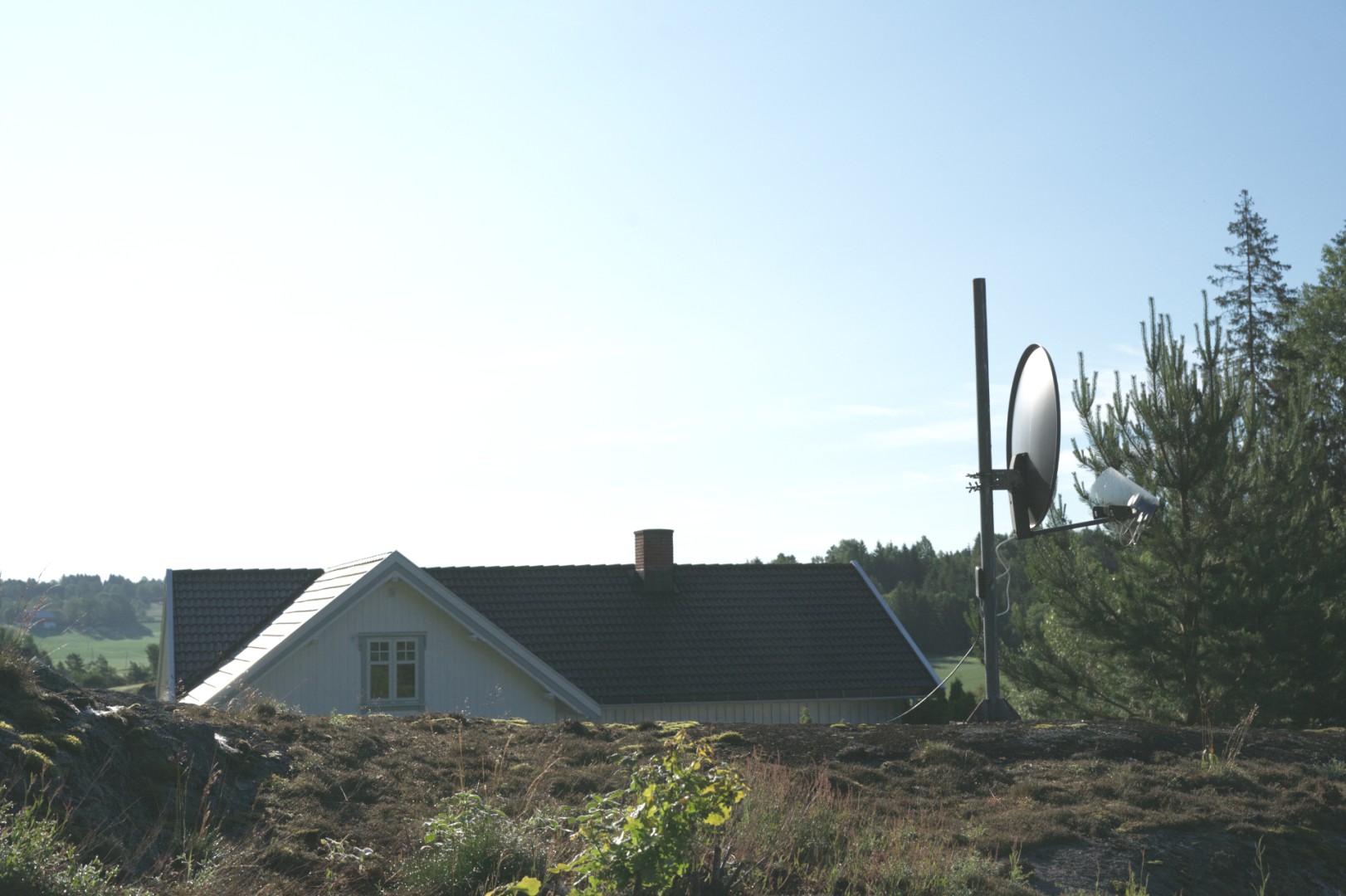 .
.
Did not see any trackers, but maybe some.
Sat dish needs to point to the signal source.
Cheers,
Peter
Depending on the time of year and your location in Australia I'll wager you're losing around 30% of the capability of your panels, perhaps more.
OK if you're just a tourist/holiday maker perhaps but not if your caravan is where you live.
So you can get all complicated with moving portables around all the time or making them tiltable or simply add another panel or 2 and forget them.
Cheers,
Peter
It's like trying to have a conversation with a fourteen year old.
I guess a 14 year old is pretty tech savvy nowadays, at least the ones I know. I agree with you about the losses of flat panels, and on top they heat up without airflow underneath and loose even more capacity, apart from the fact that they transfer a lot of heat onto the roof and into the van.
I can lift mine to up to 60 degrees and that's measured from the roof plane. Just by having cooler panels at 5 degrees is already a win.
regards
Gmd
As a result of Mike's original post, it made me think about my setup too. I made a Solar Panel Sun Spotter out of scraps of things at home and then took some measurements of the sun's altitude each hour throughout the day. I have documented the results in the attached PDF and included some pictures. I can now point my Solar Panel at the sun, anywhere and anytime knowing it is catching the maximum amount of sun at all times (give or take). Thanks for the tip Mike.
Nice idea Kevin.
However I think we're either going to have to find an alternative to the Frosties Fruit box or start eating them for every meal before we go into production :)
Maybe you prefer Magnums.
Very true though I looked at the problem from the point of view that I had bits and pieces lying around my workshop which cost me nothing and it took only a couple of hours to put together whereas the cost of an additional solar panel was in the hundreds. On top of that, the panel weighs 12 kgs and the gadget weighs 200 grams. I tend to squeeze the last drops out of the toothbrush tube so thought I would squeeze the last drops of sunlight from the solar panel. The piece de resistance is that I get to enjoy the creation of something useful from pieces of junk. To me, it's very rewarding. Simple things amuse simple minds.
Cheers,
Roy.
IMO a combination of roof and portables is the best compromise. Roof panels must be pretty inefficient compared to a portable that gets moved 3 or 4 times a day.
Ill go lithium in a couple of years I think if the van is getting plenty of use.
Out of curiosity.
What do you get flat on ground compared to 60deg? (Worst v best)
It is simply back of the envelope calculations.
Yes that is the general drift of it.
I also observed in previous years when I had loose portable panels that in strong sunlight the panels get very hot flat on the ground and the output is noticeably reduced by this effect. So when I played with them I got noticeably more current by angling the panels 'a bit' and allowing them to cool by the convection effect. Sorry no actual figures to quote. But I did make some stands to hold them at an angle after that.
Jaahn
You'd be aware Jaahn that the aspect of the panels, along with the time of year, has as big an effect as anything on performance. Cheers.
Hi Yobar
Yes I am aware but was trying to be a bit non technical.
But here is the technical bit. The sun has roughly the same power, if it is clear full sun, from sun rise till sun set. Small differences but not significant. A panel will receive the full approx 1000W/sq meter power if it is square to the sun or close to it. But as the panel angle horizontal or vertical turns away from the direct sun, the power drops off (to zero at 90 deg). As was shown above the effective area exposed to the sun decreases. Not rocket science ! Your latitude will be important to determine the angle north to stand them up and has been discussed earlier in the thread.
So if you stand the panels up and facing the sun square on, approximately, from sunup to sun down, you can optimise the output. In practice say 4-5 moves over the day is enough. IMHO. The very fact of standing the panels up allows cooler running due to the convection away of heat, so power output is improved a bit by that too. This improved extraction of power by "tracking" the sun is well documented for the past 50+ years or more. When panels were very expensive, it was worth using expensive trackers. Panels are cheap now !
But as well there is a difference in the sun hours between summer and winter. The day is longer in summer and shorter in winter. This also varies depending on where you are, north or south. So in Australia down south you might have to track more in winter to keep up the power but in summer it might not be important.
cheers jaahn
https://www.solarreviews.com/blog/are-solar-axis-trackers-worth-the-additional-investment
-- Edited by Jaahn on Sunday 12th of June 2022 10:02:34 AM
From memory 1970s panels at Old Halls Creek.
When the sun hits & heats up the black tank the balance of the panels rotate to track the sun. There is a tank on the bottom left & top right of the 12 panel setup. It resets itself for the next day, simples!