Please read the attached sheet its frightening to look at something like this as it could have been the instrument of a fatal accident please convoy this to as many folk and members as possible.
Many thanks
Brian Kelleher President ATCM&CC INC
Please read the attached .pdf file - CARAVAN COUPLING FAILURE
Thanks Jeff, Most enlightening. I won't add my thoughts as to the original design, but screwing the spigot to the head then welding is certainly a better, stronger and safer option. One other thing I did notice from the Pics was the number of Shackles the bloke was using. Hmmmm, no further comment. Ozjohn.
ozjohn said
09:22 AM Jun 21, 2014
Whoops! Double post.
-- Edited by ozjohn on Saturday 21st of June 2014 09:22:56 AM
Dougwe said
09:31 AM Jun 21, 2014
Not good at all Jeff, I hope no one was injured during the drama.
I wonder if the "McHitch" has a similar or other problem as I rather like the look of them.
-- Edited by Dougwe on Saturday 21st of June 2014 02:37:54 PM
Legendts said
10:20 AM Jun 21, 2014
Yes John, (and others) I thought most would pick up on the shackles etc. he was so lucky it failed at low speed but I believe if the attachment comments are correct that Oz Hitch needed to put out a recall to have the hitches checked. How many more are on the road travelling at the legal speed waiting to fail?
Kendo said
11:12 AM Jun 21, 2014
Some scary things here
Having a toolmaking background and having worked for a major car company for 31 years and seen some of the "minor" things that have caused "major" recalls, and now working in OHS Safety. This just leaves me numb
This component is poorly engineered, the manufacturer has admitted this has happened before!! and to think that someone has Risk Assessed this whole situation and has taken the decision that they will only respond to failures, is absolutely INSANE!!!
I can see some poor bugger being on the rough end of this and a major court case being the result.
The use of "D" shackles in this instance is a different issue (but maybe not with this manufacturers apparent attitude). If your safety chain is not long enough have it replaced by an accredited repairer.
For better or worse our world has changed. Apart from the obvious "Don't do this" use of the shackles. Insurance companies will look for ANY way to not pay out. If this had caused (external) damage or injury I wouldn't think you would get a favourable outcome from them.
WOW I think it's time for a lay down. I exhausted just thinking about this
justcruisin01 said
08:51 PM Jun 21, 2014
Dont have to be an engineer to see why that broke.
One would have to ask just what qualifactions some of these desighners have & what testing takes place.
Seems like any one can produce a product & place it o the market.
Another unit is the one with a uni joint & welded end caps to keep it together also looks scarey.
Baz421 said
09:26 PM Jun 21, 2014
Yep very scary,, poor design and poor welding,, maybe not even the right rods or welding procedure.
We have Hyland Hitch and I just went and had a bopeep (spell check loved that one),, lol.
Ours has the spigot going right through the yoke and the spigot looks as if it was prepared for welding ie chamfered end. Weld looks very substantial, need at least 3.2mm rod to achieve what looks (from simple visual inspection to be well done) to be good weld.
I built a 44' steel yacht so I had some experience welding and testing welds to destruction,,, but you never know,, do you, unless you do it yourself?
Anyway haven't heard of any Hyland Hitch failures to date.
-- Edited by Baz421 on Saturday 21st of June 2014 09:29:31 PM
ozjohn said
10:02 PM Jun 21, 2014
It would appear the coupling hasn't been designed and/or tested to comply with ADR62/01, but if testing was carried out or computations supported the strength os the coupling as designed then some thong has gone wrong with Quality Control. procedures.
Lots of reading below from ADR 62/01 Cheers, Ozjohn.
12.3.Strength Requirements
12.3.1.Couplings specially designed for use between LA, LB, LC, LD category and LEM sub category towing vehicles and trailers up to 750Kg ATM when installed in the design configuration must withstand the test requirements as per either clause 12.3.1.1 or clause 12.3.1.2 without either incurring any residual deformation that would interfere or degrade the function of the assembly or any breaks, cracks or separation of components and shall have a capacity to tow trailer of 750Kg ATM.
12.3.1.1.the following separately applied static forces:
12.3.1.1.1.longitudinal tension and compression of 18.4 kN; and
12.3.1.1.2.vertical tension and compression of 7.4 kN; and
12.3.1.1.3.transverse tension and compression of 7.4 kN.
12.3.1.2.A minimum horizontal alternating force of ± 2.52 kN acting in a line parallel to the ground and in the longitudinal median plane of the towing vehicle passing through the centre of the coupling applied for 2 million cycles. The frequency of the longitudinal forces not to exceed 35Hz, but must be chosen not to coincide with any natural frequency of the system.
12.3.2.Couplings specially designed for use between towing vehicles and trailers up to 3.5 tonnes ATM when installed in the design configuration must withstand the test requirements as per either clause 12.3.2.1 or clause 12.3.2.2 without either incurring any residual deformation that would interfere or degrade the function of the assembly or any breaks, cracks or separation of components and shall have a capacity to tow trailer of 3.5 tonnes ATM.
12.3.2.1.the following separately applied static forces:
12.3.2.1.1.longitudinal tension and compression of 86 kN; and
12.3.2.1.2.vertical tension and compression of 35 kN; and
12.3.2.1.3.transverse tension and compression of 35 kN.
12.3.2.2.A minimum horizontal alternating force of ± 12 kN acting in a line parallel to the ground and in the longitudinal median plane of the towing vehicle passing through the centre of the Coupling applied for 2 million cycles. The frequency of the longitudinal forces not to exceed 35 Hz, but must be chosen not to coincide with any natural frequency of the system.
12.3.3.Couplings specially designed for use between towing vehicles and trailers over 3.5 tonnes ATM when installed in the design configuration must withstand the test requirements as per either clause 12.3.3.1 or clause 12.3.3.2 without either incurring any residual deformation that would interfere or degrade the function of the assembly or any breaks, cracks or separation of components.
12.3.3.1.D-value rated Dynamic Test Requirements
12.3.3.1.1.A minimum horizontal alternating force of (± 0.6 x Couplings D-value ) acting in a line parallel to the ground and in the longitudinal median plane of the towing vehicle passing through the centre of the Coupling applied for 2 million cycles. The frequency of the longitudinal forces not to exceed 35 Hz, but must be chosen not to coincide with any natural frequency of the system.
12.3.3.2.D and V-value rated Dynamic Test Requirements
12.3.3.2.1.A minimum horizontal alternating force of (± 0.6 x Coupling D-value) acting in the longitudinal axis of the Coupling and a minimum vertical alternating force of ( static vertical coupling load ± 0.6 x Coupling V-value ) in the vertical axis of the Coupling applied through the Coupling centre asynchronously for 2 million cycles each.
Static vertical load in kN = g x S
where: g = acceleration due to gravity (assumed to be 9.81 m/sec2)
S = vertical load in tonnes (ATM - GTM)
12.3.3.2.2.The vertical and horizontal components shall be sinusoidal in shape and shall be applied asynchronously where the difference of their frequencies shall be between 1 % and 3 % and not exceed 35 Hz, but must be chosen not to coincide with any natural frequency of the system.
12.4.Marking Requirements
12.4.1.Both parts of the Coupling specially designed for use between LA, LB, LC, LD category and LEM sub category towing vehicles and trailers up to 750 Kg ATM must comply with the following marking requirements:
12.4.1.1.the Coupling manufacturers name or trademark; and
12.4.1.2."750 kg" (ie the maximum allowable trailer ATM for which the Coupling is rated),
12.4.1.3.the words "Model (model identifier) use with model (model identifier)".
12.4.2.Both parts of the Coupling specially designed for use between towing vehicles and trailers up to 3.5 tonne ATM must be marked with:
12.4.2.1.the Coupling manufacturers name or trademark; and
12.4.2.2."3.5 TONNE" (ie the maximum allowable trailer ATM for which the Coupling is rated); and
12.4.2.3.the words "Model (model identifier) use with model (model identifier)".
PeterD said
11:19 PM Jun 21, 2014
John, they were probably tested to conform with the requirements you outlined. Then comes along a monkey to operate the welder and he does not do as good a job as the operator who constructed the test models. You then get some catastrophic results. Looks like they have redesigned them to get around the possibility of poor welding.
The Hats said
07:12 AM Jun 22, 2014
We are haveing a Mchitch on the new Roadstar off road van
here is a link to the product as a semi retiered road train driver I love it.
http://www.youtube.com/watch?v=31Q-i9RKseQ
Cheers
The Hats
Dougwe said
09:57 AM Jun 22, 2014
Wow, I liked the previous model but how easy is the new model. Makes it easy for a solo traveller.
Kendo said
10:16 AM Jun 22, 2014
Interesting comparison
The McHitch components appear to be made from a "Forged process" (all one piece,no welds). A lot of thought and design work has obviously gone into the McHitch. The "Taper lock" system is a nice touch with the guide plate as well.
I would expect the McHitch "not to be cheap" BUT most often in life you get what you pay for. I would think when you consider the value of what's hanging off it, it's money well spent.
The other hitch? .................................I think a picture is worth a thousand words
Legendts said
10:22 AM Jun 22, 2014
Well put Kendo. I have been looking at the McHitch for a while and am seriously considering that upgrade.
ozjohn said
11:19 AM Jun 22, 2014
I like the Hitchmaster DO35. OJ
Dougwe said
11:30 AM Jun 22, 2014
One thing about the McHitch is you can always keep the original hitch from the Den and put back on then take the Mc for any upgrade of Den that might take place in the future. It's not that bad $$ wise either really. I spose you could do that with any of the other ones out there too.
I have spoken to a few people with the Mc and all think it is great with no complaints. I don't really need it with the Avan but will definitely add it to the list when I do my upgrade of Den in the not too distant future.
As I said earlier, that newbie is a little ripper for sure. Gee between one of those on the back and my self design wombat scoop on the front of the tug, I would be set for fun in the playground.
Legendts said
11:53 AM Jun 23, 2014
I have just sent a request via the Oz Hitch website to ask what is being done with regard to recalls etc. I'll post further when/if I get a reply.
grahos said
04:15 PM Jun 23, 2014
The mchitch is only as strong as the uni joint which does not look very heavy to me.
They should have used a truck or 4wheel drive tractor uni.
The Hats said
08:17 PM Jun 23, 2014
grahos wrote:
The mchitch is only as strong as the uni joint which does not look very heavy to me. They should have used a truck or 4wheel drive tractor uni.
Mate have you ever held one they are extremely well built, The pic does not do the unit justice the uni is much larger than it looks.
Like I said as a road train driver for over 35 years I am fairly well clued up on towing hitches. I would not even consider it if I thought there would be even the slightest. problem.
Cheers
The Hats
BTSV_Berni said
12:52 PM Jun 24, 2014
McHitch is not OzHitch. Maybe he messed up with his comment.
Regards, Berni
Legendts said
09:49 AM Jun 25, 2014
Update. Response from Oz Hitch.
This is what I emailed them.
Message Subject: Failure
Good Morning,I have just been made aware of an Oz Hitch failure and have seen photos and a write up of the failure. It was also stated that a few failures had occurred. Can I ask what is being done regarding this as I have not seen any recall for inspections? I tow a caravan regularly and am currently on the road and have no desire to meet, head on, a van detached from its tug.
Looking forward to your response.
This is the response.
Good Day Jeff,
Could you please let me know when you bought your hitch. If possible send me a copy of your invoice.
Thanks
Bruce
I responded with,
Hello Bruce,
I don't have one of your hitches but was concerned about what I read of the failure/s hence my contact.
Kind Regards.
That was Monday and haven't heard anymore.
Mr B2 said
11:48 AM Jun 27, 2014
Universal Joints are designed for rotational stresses, and gearing to counter the stresses, They are not designed for SWL,
Engineering Blacksmith by Trade, Boilermaker/DLI Welder with 50 years practical experience, No, I would not use one,
ozjohn said
12:12 PM Jun 27, 2014
Mr B2 wrote:
Universal Joints are designed for rotational stresses, and gearing to counter the stresses, They are not designed for SWL,
Engineering Blacksmith by Trade, Boilermaker/DLI Welder with 50 years practical experience, No, I would not use one,
Yep! Designed for torque not tensile strength. i.e turning not pulling. OJ
SnowT said
07:01 PM Jun 27, 2014
I had a Look at the weld and I think They Really Screwed Up..
- Instead of having a beveled edge on the shaft and a bevel on the U Piece and then Fill the join they just put the short shaft thru the hole and welded it.. Which gives you an inconsistency in the weld penetration and a week weld..
I don't know where their engineer got his papers from, But I would think the people welding the unit would have some sense of how to do the job properly..
I had a Look at the weld and I think They Really Screwed Up..
- Instead of having a beveled edge on the shaft and a bevel on the U Piece and then Fill the join they just put the short shaft thru the hole and welded it.. Which gives you an inconsistency in the weld penetration and a week weld..
I don't know where their engineer got his papers from, But I would think the people welding the unit would have some sense of how to do the job properly..
Juergen
Juergen
your diagram is what the Hyland Hitch looks like not the Oz Hitch.
The Oz Hitch shaft (shown in OP) fits into a blind recess so unfortunately cannot be welded as you describe above.
SnowT said
07:59 PM Jun 27, 2014
If I have the diagram[of just the weld area] then if it's a blind hole then someone really screwed up..
I don't think it is a blind hole... I think's its a thru and thru and if you look at the 2nd photo you can see how poor the weld penetration is..[You can see the red dirt
in My Pic imagine the side are bent up to make the rest of the U shape..
I was only depicting the weld area..
Another thing.. The Stud is also has the square Plate on the stud.. if that is Part of the stud, where is the weld on that side of the stud....
Juergen
Baz421 said
08:05 PM Jun 27, 2014
SnowT wrote:
If I have the diagram[of just the weld area] then if it's a blind hole then someone really screwed up..
I don't think it is a blind hole... I think's its a thru and thru and if you look at the 2nd photo you can see how poor the weld penetration is..[You can see the red dirt
in My Pic imagine the side are bent up to make the rest of the U shape..
I was only depicting the weld area..
Another thing.. The Stud is also has the square Plate on the stud.. if that is Part of the stud, where is the weld on that side of the stud....
Juergen
Ok apologies I see what you mean now. yep chicken s**t welding for sure.
Hi All
Please read the attached sheet its frightening to look at something like this as it could have been the instrument of a fatal accident please convoy this to as many folk and members as possible.
Many thanks
Brian Kelleher
President
ATCM&CC INC
Please read the attached .pdf file - CARAVAN COUPLING FAILURE
Thanks Jeff,
Most enlightening.
I won't add my thoughts as to the original design, but screwing the spigot to the head then welding is certainly a better, stronger and safer option.
One other thing I did notice from the Pics was the number of Shackles the bloke was using. Hmmmm, no further comment.
Ozjohn.
Whoops! Double post.
-- Edited by ozjohn on Saturday 21st of June 2014 09:22:56 AM
Not good at all Jeff, I hope no one was injured during the drama.
I wonder if the "McHitch" has a similar or other problem as I rather like the look of them.
-- Edited by Dougwe on Saturday 21st of June 2014 02:37:54 PM
Some scary things here

Having a toolmaking background and having worked for a major car company for 31 years and seen some of the "minor" things that have caused "major" recalls, and now working in OHS Safety. This just leaves me numb


This component is poorly engineered, the manufacturer has admitted this has happened before!! and to think that someone has Risk Assessed this whole situation and has taken the decision that they will only respond to failures, is absolutely INSANE!!!


I can see some poor bugger being on the rough end of this and a major court case being the result.
The use of "D" shackles in this instance is a different issue (but maybe not with this manufacturers apparent attitude). If your safety chain is not long enough have it replaced by an accredited repairer.
For better or worse our world has changed. Apart from the obvious "Don't do this" use of the shackles. Insurance companies will look for ANY way to not pay out. If this had caused (external) damage or injury I wouldn't think you would get a favourable outcome from them.
WOW I think it's time for a lay down. I exhausted just thinking about this


Dont have to be an engineer to see why that broke.
One would have to ask just what qualifactions some of these desighners have & what testing takes place.
Seems like any one can produce a product & place it o the market.
Another unit is the one with a uni joint & welded end caps to keep it together also looks scarey.
Yep very scary,, poor design and poor welding,, maybe not even the right rods or welding procedure.
We have Hyland Hitch and I just went and had a bopeep (spell check loved that one),, lol.
Ours has the spigot going right through the yoke and the spigot looks as if it was prepared for welding ie chamfered end. Weld looks very substantial, need at least 3.2mm rod to achieve what looks (from simple visual inspection to be well done) to be good weld.
I built a 44' steel yacht so I had some experience welding and testing welds to destruction,,, but you never know,, do you, unless you do it yourself?
Anyway haven't heard of any Hyland Hitch failures to date.
-- Edited by Baz421 on Saturday 21st of June 2014 09:29:31 PM
It would appear the coupling hasn't been designed and/or tested to comply with ADR62/01, but if testing was carried out or computations supported the strength os the coupling as designed then some thong has gone wrong with Quality Control. procedures.
Lots of reading below from ADR 62/01
Cheers, Ozjohn.
12.3. Strength Requirements
12.3.1. Couplings specially designed for use between LA, LB, LC, LD category and LEM sub category towing vehicles and trailers up to 750Kg ATM when installed in the design configuration must withstand the test requirements as per either clause 12.3.1.1 or clause 12.3.1.2 without either incurring any residual deformation that would interfere or degrade the function of the assembly or any breaks, cracks or separation of components and shall have a capacity to tow trailer of 750Kg ATM.
12.3.1.1. the following separately applied static forces:
12.3.1.1.1. longitudinal tension and compression of 18.4 kN; and
12.3.1.1.2. vertical tension and compression of 7.4 kN; and
12.3.1.1.3. transverse tension and compression of 7.4 kN.
12.3.1.2. A minimum horizontal alternating force of ± 2.52 kN acting in a line parallel to the ground and in the longitudinal median plane of the towing vehicle passing through the centre of the coupling applied for 2 million cycles. The frequency of the longitudinal forces not to exceed 35Hz, but must be chosen not to coincide with any natural frequency of the system.
12.3.2. Couplings specially designed for use between towing vehicles and trailers up to 3.5 tonnes ATM when installed in the design configuration must withstand the test requirements as per either clause 12.3.2.1 or clause 12.3.2.2 without either incurring any residual deformation that would interfere or degrade the function of the assembly or any breaks, cracks or separation of components and shall have a capacity to tow trailer of 3.5 tonnes ATM.
12.3.2.1. the following separately applied static forces:
12.3.2.1.1. longitudinal tension and compression of 86 kN; and
12.3.2.1.2. vertical tension and compression of 35 kN; and
12.3.2.1.3. transverse tension and compression of 35 kN.
12.3.2.2. A minimum horizontal alternating force of ± 12 kN acting in a line parallel to the ground and in the longitudinal median plane of the towing vehicle passing through the centre of the Coupling applied for 2 million cycles. The frequency of the longitudinal forces not to exceed 35 Hz, but must be chosen not to coincide with any natural frequency of the system.
12.3.3. Couplings specially designed for use between towing vehicles and trailers over 3.5 tonnes ATM when installed in the design configuration must withstand the test requirements as per either clause 12.3.3.1 or clause 12.3.3.2 without either incurring any residual deformation that would interfere or degrade the function of the assembly or any breaks, cracks or separation of components.
12.3.3.1. D-value rated Dynamic Test Requirements
12.3.3.1.1. A minimum horizontal alternating force of (± 0.6 x Couplings D-value ) acting in a line parallel to the ground and in the longitudinal median plane of the towing vehicle passing through the centre of the Coupling applied for 2 million cycles. The frequency of the longitudinal forces not to exceed 35 Hz, but must be chosen not to coincide with any natural frequency of the system.
12.3.3.2. D and V-value rated Dynamic Test Requirements
12.3.3.2.1. A minimum horizontal alternating force of (± 0.6 x Coupling
D-value) acting in the longitudinal axis of the Coupling and a minimum vertical alternating force of ( static vertical coupling load ± 0.6 x Coupling V-value ) in the vertical axis of the Coupling applied through the Coupling centre asynchronously for 2 million cycles each.
Static vertical load in kN = g x S
where:
g = acceleration due to gravity (assumed to be 9.81 m/sec2)
S = vertical load in tonnes (ATM - GTM)
12.3.3.2.2. The vertical and horizontal components shall be sinusoidal in shape and shall be applied asynchronously where the difference of their frequencies shall be between 1 % and 3 % and not exceed 35 Hz, but must be chosen not to coincide with any natural frequency of the system.
12.4. Marking Requirements
12.4.1. Both parts of the Coupling specially designed for use between LA, LB, LC, LD category and LEM sub category towing vehicles and trailers up to 750 Kg ATM must comply with the following marking requirements:
12.4.1.1. the Coupling manufacturers name or trademark; and
12.4.1.2. "750 kg" (ie the maximum allowable trailer ATM for which the Coupling is rated),
12.4.1.3. the words "Model (model identifier) use with model (model identifier)".
12.4.2. Both parts of the Coupling specially designed for use between towing vehicles and trailers up to 3.5 tonne ATM must be marked with:
12.4.2.1. the Coupling manufacturers name or trademark; and
12.4.2.2. "3.5 TONNE" (ie the maximum allowable trailer ATM for which the Coupling is rated); and
12.4.2.3. the words "Model (model identifier) use with model (model identifier)".
We are haveing a Mchitch on the new Roadstar off road van
here is a link to the product as a semi retiered road train driver I love it.
http://www.youtube.com/watch?v=31Q-i9RKseQ
Cheers
The Hats
Interesting comparison
The McHitch components appear to be made from a "Forged process" (all one piece,no welds). A lot of thought and design work has obviously gone into the McHitch. The "Taper lock" system is a nice touch with the guide plate as well.
I would expect the McHitch "not to be cheap" BUT most often in life you get what you pay for. I would think when you consider the value of what's hanging off it, it's money well spent.
The other hitch? .................................I think a picture is worth a thousand words

I like the Hitchmaster DO35.
OJ
One thing about the McHitch is you can always keep the original hitch from the Den and put back on then take the Mc for any upgrade of Den that might take place in the future. It's not that bad $$ wise either really. I spose you could do that with any of the other ones out there too.
I have spoken to a few people with the Mc and all think it is great with no complaints. I don't really need it with the Avan but will definitely add it to the list when I do my upgrade of Den in the not too distant future.
As I said earlier, that newbie is a little ripper for sure. Gee between one of those on the back and my self design wombat scoop on the front of the tug, I would be set for fun in the playground.
They should have used a truck or 4wheel drive tractor uni.
Mate have you ever held one they are extremely well built, The pic does not do the unit justice the uni is much larger than it looks.
Like I said as a road train driver for over 35 years I am fairly well clued up on towing hitches. I would not even consider it if I thought there would be even the slightest. problem.
Cheers
The Hats
Regards, Berni
This is what I emailed them.
Message Subject: Failure
Good Morning,I have just been made aware of an Oz Hitch failure and have seen photos and a write up of the failure. It was also stated that a few failures had occurred. Can I ask what is being done regarding this as I have not seen any recall for inspections? I tow a caravan regularly and am currently on the road and have no desire to meet, head on, a van detached from its tug.
Looking forward to your response.
This is the response.
Good Day Jeff,
Could you please let me know when you bought your hitch. If possible send me a copy of your invoice.
Thanks
Bruce
I responded with,
Hello Bruce,
I don't have one of your hitches but was concerned about what I read of the failure/s hence my contact.
Kind Regards.
That was Monday and haven't heard anymore.
Universal Joints are designed for rotational stresses, and gearing to counter the stresses, They are not designed for SWL,
Engineering Blacksmith by Trade, Boilermaker/DLI Welder with 50 years practical experience, No, I would not use one,
Yep! Designed for torque not tensile strength. i.e turning not pulling.
OJ
I had a Look at the weld and I think They Really Screwed Up..
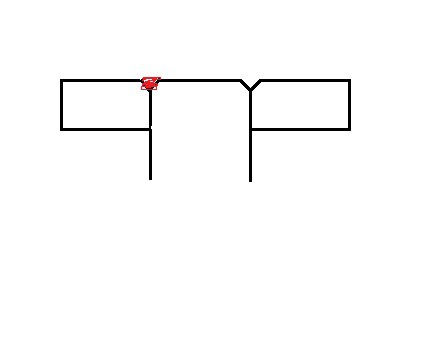
- Instead of having a beveled edge on the shaft and a bevel on the U Piece and then Fill the join they just put the short shaft thru the hole and welded it..
Which gives you an inconsistency in the weld penetration and a week weld..
I don't know where their engineer got his papers from, But I would think the people welding the unit would have some sense of how to do the job properly..
Juergen
Juergen
your diagram is what the Hyland Hitch looks like not the Oz Hitch.
The Oz Hitch shaft (shown in OP) fits into a blind recess so unfortunately cannot be welded as you describe above.
If I have the diagram[of just the weld area] then if it's a blind hole then someone really screwed up..
I don't think it is a blind hole... I think's its a thru and thru and if you look at the 2nd photo you can see how poor the weld penetration is..[You can see the red dirt
in My Pic imagine the side are bent up to make the rest of the U shape..
I was only depicting the weld area..
Another thing.. The Stud is also has the square Plate on the stud.. if that is Part of the stud, where is the weld on that side of the stud....
Juergen
Ok apologies I see what you mean now. yep chicken s**t welding for sure.